Cover art for the book: Ghosts of Bandung Black Power and Palestine in the Global Cold War by Derek A. Ide
In the introduction to his book Ghosts of Bandung: Black Power and Palestine in the Global Cold War, author Derek A. Ide discusses a comment by Robin D. G. Kelley that asks why current expressions of solidarity between Black solidarity with the Palestinians revolve around commonalities of oppression instead of commonalities of resistance and liberation, as they did in the 1960s and 1970s. It is this question which informs the history Ide presents throughout the rest of his text. It is a history which both reminded this reviewer of how his understanding of the Palestinian struggle developed and, more importantly, how US and western imperialism has both destroyed the hopes and promises of independence for many peoples while consolidating its power and control, no matter what the cost to humanity. A few pages later, while introducing the internationalist fighter for Black liberation Robert Williams, Ide once again refers to Kelley’s words, remembering a time when freedom fighters talked in terms of” imagining revolution, not (of) plotting coalitions.”
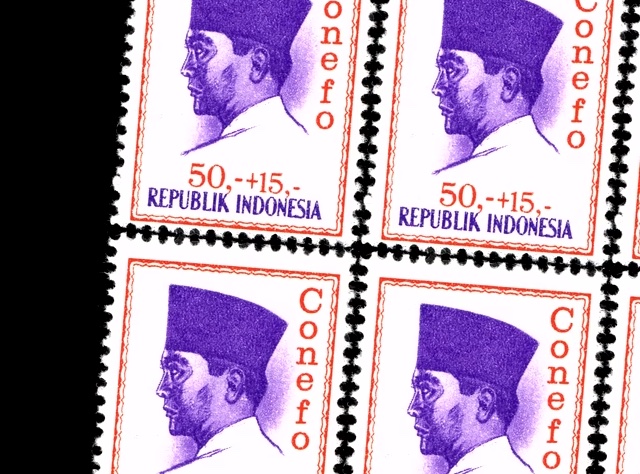
Williams, whose recently released memoir best describes his life as an international revolutionary and his politics of anti-imperialism and Black liberation, is discussed in the first chapter of Ide’s text, Titled “The Internationalist,” the author describes Williams’ importance in the early years of what ultimately became known in the West as the Long Sixties. Presenting Williams speech to a million Chinese in Beijing’s Tiananmen Square as a highlight of this particular time in history, Ide’s briefly covers Williams’ work in terms of the anti-imperialist struggle of the period; a period framed by the April 1955 meeting of the non-aligned nations in Bandung, Indonesia and the cancelled 1965 Conference of the New Emerging Forces (CONEFO also set for Indonesia. Indonesia was the site of these meetings because of its anti-imperialist leadership and its emerging role in the world as a nation whose non-alignment was staunchly anti-imperialist and determined to remain both non-aligned and anti-colonial.
Interestingly, the second chapter of Ghosts of Bandung details the biography of Richard Gibson, a CIA informer whose involvement in the international movement against colonialism and western imperialism would put him alongside many of the movement’s leaders. Although not everyone was convinced that he worked for the CIA during the period he was active, papers discovered since his death prove that he was. Despite this, his role during the period is seen as a mixed one. For the purposes of the text, the connections, actions and writings of Gibson, serve as a kind of glue that connects different forces and individuals. Like many informers throughout history, Gibson seems to have served both his paymasters and those whom he was informing on.
In Ide’s narrative, the crucial moment in his history took place in 1965 when the CONEFO conference referenced above failed to take place. The failure was a result of a series of circumstances—from the cancellation due to weather of the Second Conference of Non-Aligned Nations in Algeria to the US-sponsored coup in Indonesia. The latter event not only forced the cancellation of the conference; it also brought a murderous wave of repression upon the Indonesian people that, with the help of the CIA, killed around a million Indonesian leftists, peasants, workers and artists while bringing an extreme right-wing even fascist government into power. The facts of this coup and its wake remain unknown to most westerners (especially US residents), mostly due to the suppression of the facts by the institutions of the powerful in the west. Coincidentally, it is after the failure of this conference that Ide’s history of Black power and Palestine begins. If the CONEFO conference had taken place, the Palestine Liberation Organization (PLO) and the Black Panther Party would have had delegates there, along with other groups fighting for their liberation from western colonialism. Indeed, an important aspect to the proposed conference was to provide a place where groups fighting for a revolutionary liberation from colonialism could find solidarity, support and a place from which to organize globally. By the early 1960s it was clear to many nations in Africa, Asia and Latin America that the United Nations was primarily a body designed to support US and western imperial designs. Its role in creating Israel, supporting the US war on Korea, and its continuing support of European colonial powers in their determination to keep their colonies had made this quite clear. As for revolutionary movements fighting anticolonial wars, the UN had virtually no positive role. The organizers of CONEFO hoped to establish a world body opposed to and outside of US and western imperialism; this explained why Washington and its cohorts were determined to prevent its establishment.
As Ghosts of Bandung’s narrative unfolds, Ide’s thesis that the PLO and the struggle for Black liberation had missed their best opportunity to succeed in their struggles reveals itself. Of course, this wasn’t mere happenstance and bad luck. The failures of both movements to succeed in their goals was the result of a concerted and expanding effort by Washington and much of the west to destroy both movements. These efforts included the coup in Indonesia, the US government’s vicious repression and disruption of the Black Panther Party and the Israeli/Jordanian/US armed destruction of PLO infrastructure and leadership—a phenomenon laid bare in the 1970 conflict in Jordan known as Black September. By eliminating potential support from governments that shared the goals of Palestinian and Black liberation, the PLO and Black revolutionary organizations like the Panthers had to come up with other tactics and strategies. These included acts of terror and armed struggle. Around the same time, Ide argues that political differences appeared in these movements, especially between bourgeois nationalists and revolutionary nationalists in the PLO and internationalists and intercommunalists in the Black Panther Party. Although this text might lead one to conclude that these differences were clearcut, facts on the gorund tell otherwise. Personally speaking, it was a Blavk Panther member I knew in what was then West Germany who first suggested to me that Israel was an outpost of western imperialism and practiced colonialism. Although the international wing of the Panthers based in Algeria were the dominant section in Germany, there were those who saw the faction led by Huey Newton as the final say in the organization. Yet, they continued to support the internationalism of the Algeria group over the local turn taking place in the United States. Of course, these fissures were exploited by western intelligence operatives within and without both organizations. The fissure in these organizations likewise created cracks among their millions of supporters, ultimately turning the overall motion away from revolutionary struggle and towards negotiation informed by accommodation, not power.
In his closing remarks, Ide looks at the world of today and considers the current situation in the light of the history he has just related. As he considers the defeats of US imperialism vis-à-vis Iran’s stalemate with Washington and the Israeli position as drastically unpopular pariah, his deliberations can be summed up best perhaps in his remark that “the Iran of 2024 did not become the Indonesia of 1965.” In other words, Iran’s government (with all of its faults) still exists as the main component of the so-called Axis of Resistance to western imperialism, unlike Indonesia in 1965, when its anti-imperialist government was destroyed via Washington’s machinations and the worldwide movement against colonialism and western imperialism suffered a monumental defeat. Ghosts of Bandung is well worth the read, both for the history it provides and the possibilities it portends.